
For freelancers & self-employed professionals
Freelance Invoice Generator
Create invoices for hourly, project, and other freelance work.
- Rate
- Quote
- Timesheet
- Invoice
How it works
From freelance job to paid invoice
-
Set your rate
Calculate the hourly rate needed to reach your income target from the numbers you enter.
-
Quote the job
Show the proposed work and price before you start. A quote is not a contract.
-
Track your work
Record the work performed and time spent so you have the hours when you invoice.
-
Invoice the client
Bill hourly work, a project fee, milestones, or approved expenses on a freelance invoice.
-
Set the due date
Turn due on receipt, Net 15, Net 30, or another term into a calendar date.
Pricing
Set your freelance rate
Enter your income goal, business expenses, working time, and expected billable hours to calculate the hourly rate needed to reach your target. The calculator also shows a day rate by multiplying that hourly rate by the billable hours in a working day.
The result is based on the assumptions you enter. It is not a market rate, an average freelance rate, or a recommendation of what to charge.
Before the work
Quote the job
Before starting a project, you may give the client a quote that shows the proposed work and price.
Website copywriting
$1,500
Design services
20 hours × $100
$2,000
A quote proposes a price. It does not create a contract. See Estimate vs. Quote if you need the difference between those two documents.
Billable time
Track freelance hours
If you charge by the hour, record the work performed and time spent so you have the information needed when you invoice the client. Creating a timesheet does not copy those hours into the Invoice Generator.
| Date | Description | Hours |
|---|---|---|
| May 12, 2026 | Project planning | 5 |
| May 13, 2026 | Design & implementation | 8 |
| May 14, 2026 | Design & implementation | 7 |
| May 15, 2026 | Revisions | 5 |
Worked example
Example freelance invoice
Amounts are examples only—not a recommended freelance rate.
| Description | Hours / Qty | Rate | Amount |
|---|---|---|---|
| Project planning | 5 | $100 | $500.00 |
| Design & implementation | 20 | $100 | $2,000.00 |
| Project expenses | 1 | $150 | $150.00 |
| Total | $2,650.00 | ||
Hourly work
Hourly freelance billing
If you charge by the hour, multiply your billable hours by the agreed hourly rate.
Hours worked × Hourly rate = Amount billed
15 hours × $120/hour = $1,800
Charging by the hour?
Rate, timesheet, then invoice
-
Calculate your rate
Use your income target, expenses, and billable hours to get an hourly rate.
-
Track your hours
Record dates, descriptions, and hours on a timesheet.
-
Create your invoice
Enter those hours and the agreed rate as invoice line items.
Billing methods
Ways to bill freelance work
Hourly billing
The client is billed based on time worked. Example: 10 hours × $150 = $1,500.
Fixed project pricing
Agree on a fixed amount for a defined project and list that project and fee as a line item. Example: logo design, $2,500.
Milestone billing
For a larger project, create a separate invoice for each agreed milestone. Example: $6,000 split into $2,000 at start, first delivery, and final delivery. The Invoice Generator does not track milestones for you.
Requesting a deposit
Some freelancers and clients agree that part of the fee is due before work starts. Example: a $4,000 project with a 25% deposit of $1,000 and $3,000 remaining. That split is an example, not a recommended term.
Approved expenses
If the client has agreed to reimburse project costs, list them as separate lines—travel, printing, stock assets, or other approved expenses. This is not tax advice about deductibility.
Payment
Set when the invoice is due
A due date can be expressed as due on receipt, Net 15, Net 30, or a specific calendar date. None of these is standard or best for every freelance job.
If payment is late
Late freelance invoices
If your agreement permits a late fee, use the Late Payment Fee Calculator to calculate the fee based on the terms you entered. This page does not say whether a late fee is permitted or enforceable.
Optional
Early payment discounts
Some freelancers may agree to offer a discount for payment before a specified date. That is a choice, not a recommendation.
Invoice contents
What should a freelance invoice include?
A freelance invoice commonly includes the items below. Not every item is legally required.
- Your name or business name
- Client information
- Invoice number
- Invoice date
- Due date
- Description of work
- Hours and rate for hourly work
- Fixed fees where applicable
- Approved expenses
- Applicable taxes
- Discounts where applicable
- Total due
- Payment terms
- Notes
Steps
How to invoice as a freelancer
- Add your name or business information.
- Add the client's information.
- Give the invoice a number and date.
- Describe the freelance work being billed.
- Add hours, rates, project fees, or expenses.
- Add applicable taxes or discounts.
- Set the payment due date.
- Review the total and create the invoice.
Compare
Hourly vs. project pricing
Neither method is universally better. Choose the one that matches the work you agreed to bill.
Hourly
The client is billed based on time worked.
10 hours × $150 = $1,500
Project
The client is billed an agreed amount for a defined project.
Brand identity project = $1,500
Terms
Freelancer vs. independent contractor
A freelancer is generally a self-employed professional providing services to clients. “Independent contractor” is a broader term that may also be used for self-employed work.
Worker classification depends on the actual working relationship and applicable law, not simply what appears on an invoice.
Documents
Invoice, timesheet, quote, and receipt
- Freelance invoice vs. timesheet
- A timesheet records the time spent working. An invoice requests payment for the work. For hourly freelancers: Timesheet → Invoice.
- Freelance invoice vs. quote
- A quote shows the proposed price before the work begins. An invoice requests payment for work being billed. Create a quote in the Quote Generator or read Quote vs. Invoice.
- Freelance invoice vs. receipt
- An invoice requests payment. A receipt records that payment was received. After you are paid, use the Receipt Generator or see Invoice vs. Receipt.
Toolkit
Tools for freelancers
Freelance Rate Calculator
Calculate the hourly rate needed to reach your income target.
Early Payment Discount Calculator
Calculate the cost of offering an early-payment discount.
Resources
Freelance billing resources

How to Price Your Services
Learn how to price your services with confidence—pricing models compared, a step-by-step rate formula, worked examples, and how to raise prices.
Read guide
Estimate vs Quote
Estimate vs quote explained simply. Learn what each document means, when to use it, how they lead to an invoice, and which to send your customer first.
Read guide
Quote vs Invoice
Learn the difference between a quote and an invoice, when each becomes legally binding, and how both fit your sales workflow—with free templates and examples.
Read guide
Invoice Deposits
Learn when and how to request invoice deposits and partial payments, how much to ask for, and sample wording to get paid upfront without losing clients.
Read guide
Progress Invoicing
Progress invoicing lets you bill large projects in stages as work is completed—how it works, methods, a worked example, and how it differs from deposits.
Read guide
Invoice Payment Terms
Learn how invoice payment terms like Net 30, Net 15, and Due on Receipt work, how to choose the right ones, and how to get paid faster—with examples.
Read guide
Invoice Late Fees
Learn how to charge invoice late fees the right way—legal basics, fair rates, wording examples, and calculations that get you paid without losing clients.
Read guide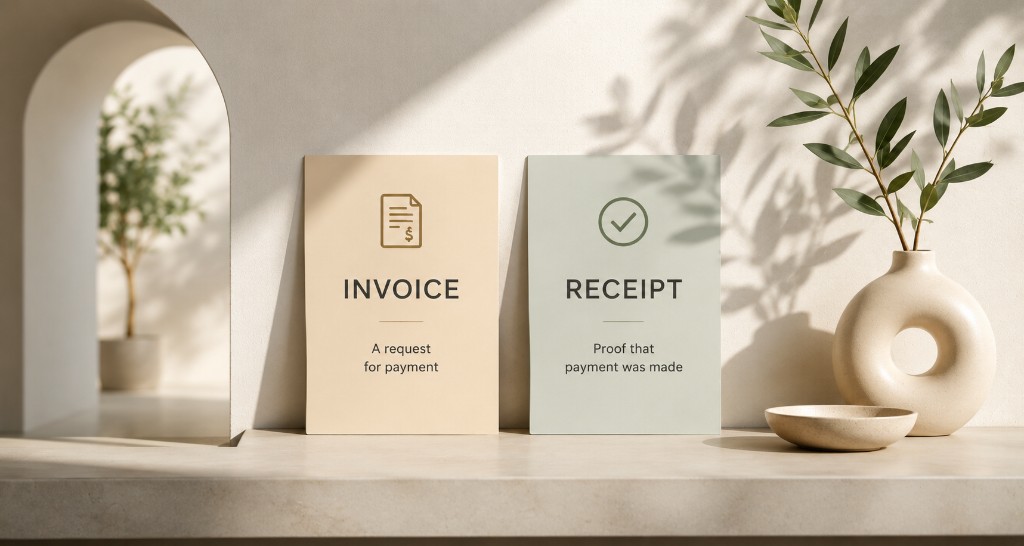
Invoice vs Receipt
Invoice vs receipt, explained simply: an invoice asks for payment, a receipt proves it. Learn when to use each, what to include, and how they fit together.
Read guideFAQ
Frequently asked questions
- How do I create an invoice as a freelancer?
- Add your name or business information, the client, an invoice number and date, a description of the work, the amounts, and when payment is due. Then create the invoice in the Invoice Generator.
- What should I put on a freelance invoice?
- A freelance invoice commonly includes your name or business name, the client, an invoice number, the invoice date, the due date, a description of the work, amounts, payment terms, and the total due. Requirements can vary.
- How do I invoice freelance work by the hour?
- Multiply the hours worked by the agreed hourly rate and list that as a line item. A timesheet can record the dates, descriptions, and hours before you create the invoice.
- Can I invoice a fixed project fee?
- Yes. List the agreed project and fee on the invoice. You do not have to itemize hours when the client is billed a fixed amount.
- Can a freelancer request a deposit?
- Freelancers and clients may agree to a deposit or milestone payments before or during the work. Create a separate invoice for the amount that is due.
- How long should I give a client to pay a freelance invoice?
- That depends on the agreement. Examples include due on receipt, Net 15, Net 30, or a specific due date. Use the Invoice Due Date Calculator to turn a term into a date.